
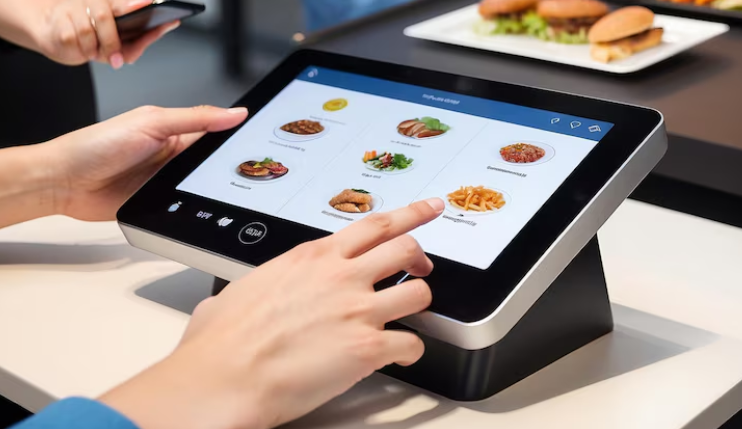
In modern restaurants, payment processing is no longer a separate step that happens after the order is taken. Instead, it is fully woven into the point-of-sale workflow.
When payments are integrated directly into the POS system, transactions move faster, reporting becomes cleaner, and operational errors decrease.
For restaurant operators, understanding how integrated payments function inside the POS environment can help clarify why this setup is now considered best practice especially for multi-location and high-volume brands.
What Are Integrated Payments?
Integrated payments refer to a setup where the payment processor communicates directly with the POS platform. Instead of entering transaction totals manually into a separate credit card terminal, the POS sends the exact order amount to the payment device automatically.
When the guest taps, swipes, or inserts their card, the transaction is processed and immediately reflected inside the POS. The sale, payment type, tax details, and timestamp are recorded together in one unified system.
A modern restaurant pos system is designed to handle this workflow seamlessly, ensuring that the order and payment data remain synchronized from start to finish.
How The Payment Process Works Step By Step
Although integrated payments feel simple at the counter, several secure steps happen behind the scenes.
First, the cashier enters the order into the POS. The system calculates subtotal, tax, discounts, and final total. When the staff member selects “pay,” the POS sends the exact transaction amount to the payment device.
The guest completes the payment using card, contactless tap, or mobile wallet. The payment processor authorizes the transaction and sends confirmation back to the POS. Once approved, the system finalizes the sale, updates reporting dashboards, and logs the payment method automatically.
Why Integration Improves Accuracy
One of the biggest benefits of integrated payments is error reduction. In non-integrated setups, staff may need to type totals into a standalone payment device. This introduces the possibility of mismatched amounts or duplicate entries.
With integration, the payment device and POS share the same data stream. Refunds, voids, and adjustments are also processed directly through the POS, ensuring that financial reports remain accurate.
For multi-location restaurants, this consistency is especially important. Clean, standardized reporting across all stores supports better financial oversight.
How Integrated Payments Connect With Kitchen Workflows
Payment integration does more than improve checkout accuracy. It also supports smoother coordination with back-of-house systems.
When a transaction is completed in the POS, the order status is confirmed and properly logged. In systems integrated with a kitchen display system, this confirmation helps ensure that kitchen teams are preparing only valid, finalized orders.
For example, in quick-service environments, some workflows trigger kitchen preparation as soon as payment is authorized. Because the POS and payment processor are aligned, there is less risk of preparing orders that later fail due to declined payments.
This coordination reduces waste and improves operational efficiency.
Integrated Payments In Drive-Thru Operations
Drive-thru service relies heavily on speed and precision. Any delay at the payment window can back up the entire lane.
When a drive thru system is connected to an integrated POS environment, payment capture becomes faster and more accurate. Orders taken in the drive-thru flow directly into the POS, and the payment amount is transmitted automatically to the payment device at the window.
Because the transaction is recorded instantly, reporting reflects drive-thru performance alongside dine-in and takeout channels without needing separate reconciliation.
This unified workflow helps maintain throughput and improves the guest experience during busy periods.
Security And Compliance In Integrated Payments
Integrated payment systems typically follow strict security standards. Payment data is encrypted as it travels between the device and the processor. Many systems also use tokenization, replacing card numbers with secure tokens that cannot be reused if intercepted.
Because integrated systems reduce manual handling of card information, they lower the risk of human error and exposure.
Restaurant operators should still ensure their POS provider complies with industry security standards and offers regular updates to protect against emerging threats.
Reporting And Reconciliation Benefits
Integrated payments simplify end-of-day reconciliation. Since every transaction is recorded inside the POS with its corresponding payment method, managers can easily match totals without manually cross-checking separate systems.
This reduces closing time, improves accounting accuracy, and makes it easier to analyze payment trends. Operators can see how much revenue comes from credit cards, contactless payments, digital wallets, or cash — all within the same reporting dashboard.
For growing brands, centralized payment data across multiple locations supports stronger financial oversight and strategic planning.
Scalability For Growing Restaurant Brands
As restaurants expand into new locations or add service channels, payment complexity increases. Integrated systems scale more easily because each new location connects to the same payment and POS framework.
This ensures consistent processing rules, reporting standards, and security protocols across all stores.
Instead of managing separate payment setups at each location, operators maintain a unified structure that supports growth without increasing administrative burden.
Final Thoughts
Integrated payments work within restaurant POS systems by connecting transaction capture, payment authorization, and reporting into one seamless workflow. By eliminating manual entry, reducing errors, and synchronizing financial data across service channels, integrated systems improve both operational efficiency and reporting accuracy. When combined with kitchen and drive-thru integrations, a fully integrated POS environment supports faster service, cleaner data, and a more reliable foundation for restaurant growth.